


For about two years, I woke up at the exact same time every single night. 3:10, give or take a few minutes. Wide awake, staring at the ceiling, heart going a little faster than it had any reason to.
I’m 52. I chalked it up to the obvious things. Menopause. Stress. Getting older. The catch-all list every woman my age gets handed when she says she isn’t sleeping right.
My doctor gave me that same list, actually. Cut the caffeine after noon. No screens an hour before bed. Try melatonin. Maybe a magnesium supplement. Keep the room cool. Get more exercise, but not too late in the day.
I did all of it. Every single item. I bought the blackout curtains. I put my phone in the other room. I took the melatonin for three months. And I still woke up at 3:10 in the morning like my body had an alarm clock I couldn’t find to turn off.
The thing that finally got my attention wasn’t even the sleep, if I’m honest. It was everything else that had been quietly piling up around it, that I had never once thought to connect.
There was this little roll of softness under my ribs on the right side that had never been there before. Not fat exactly. Just a fullness, a heaviness, that I noticed when I’d lie on my side.
I was waking up puffy. My face, my eyes, my fingers. I’d take my rings off some mornings because they felt tight, and by afternoon they’d be fine again.

There was the fog. That heavy, cotton-headed first hour or two of the morning where I genuinely could not string a full sentence together until the second cup of coffee hit. I started scheduling my important calls for after 10am because I didn’t trust my own brain before that.

And my digestion had gone strange. Anything fried, anything rich, anything with a lot of butter or oil, and I’d feel it sitting in me for hours, like a stone.
I want to be clear about how I saw all of this at the time. I saw four completely separate problems. Bad sleep. A puffy face. Brain fog. A touchy stomach. Four different things, four different parts of my body, four different explanations. It never once occurred to me that they might be one thing wearing four different costumes.
Why would it? Nobody teaches you to think that way. You get a symptom, you Google the symptom, you get advice about that one symptom. You treat them like they live on separate islands.
Then my sister sent me an article. She’s the one in the family who reads everything, who falls down the health rabbit holes at midnight, and usually I skim what she sends and forget it. But this one had a line in it that stopped me cold.
The line was about the liver and the body’s internal clock. It said that your liver does the bulk of its heavy lifting overnight, roughly in the window between one and three in the morning. That’s when it’s supposed to be quietly sorting through everything you ate and drank and absorbed during the day, processing it, and moving the waste along to be cleared out.
And then it said something that made me sit up in bed. It said that when that overnight processing doesn’t run clean, when the liver is congested or overloaded and struggling to keep up, some people wake up right in the middle of that window. Restless. Warm. Wired for no reason they can name.
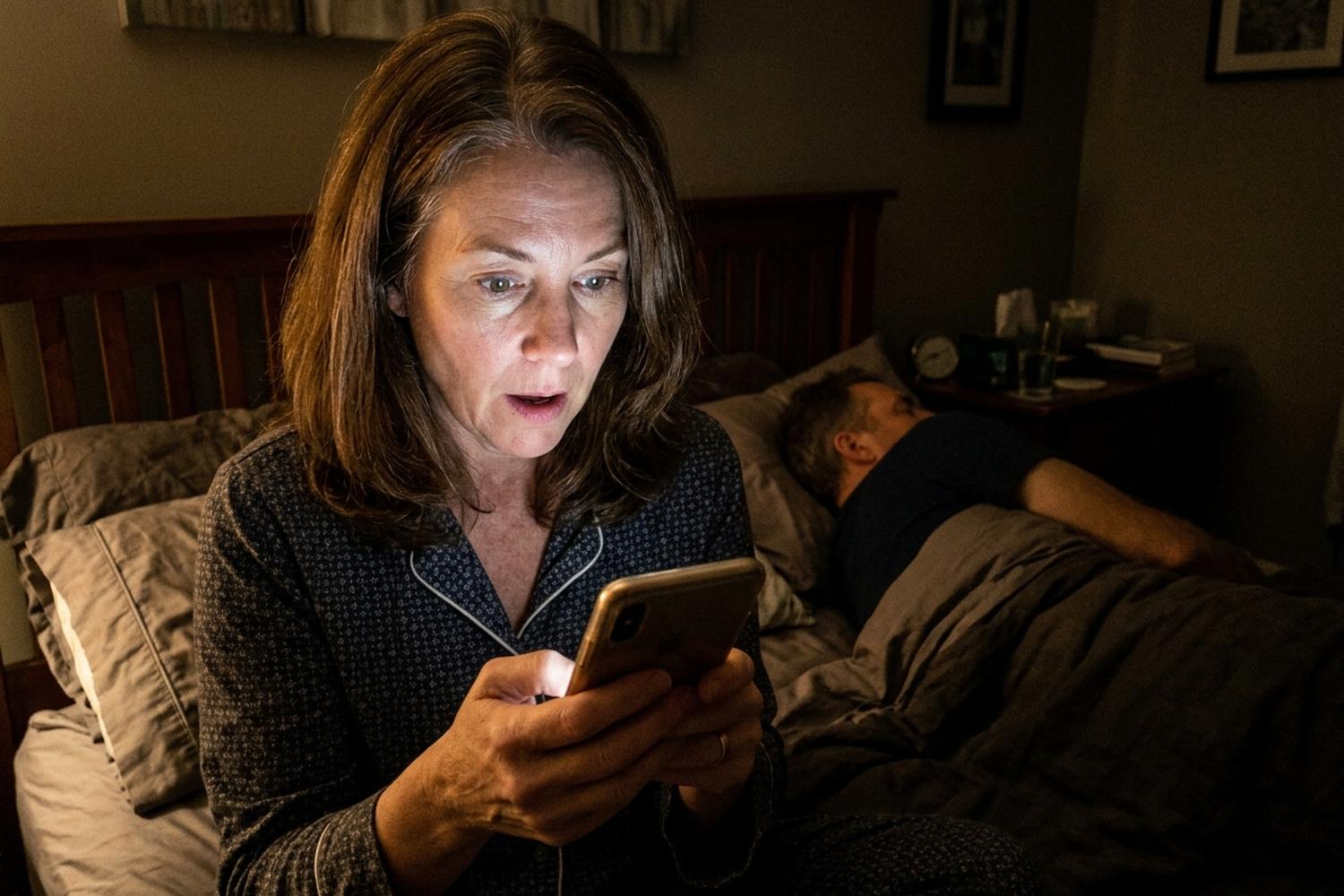
I read that and I thought, that is my exact time. That is 3:10 in the morning, described in a paragraph, by someone who has never met me.
Now, I’m not going to sit here and tell you it was some magic revelation and I understood the whole thing. I’m not a doctor. I don’t pretend to know the biochemistry. But I want to tell you what it did for me emotionally, because that part mattered.
For two years, every doctor and every article had treated my sleep as the problem. The thing to fix was the sleep. And this was the first time anyone had suggested that the 3am waking wasn’t the problem at all. It was a symptom. It was a signal. It was my body flagging that something in the overnight cleanup wasn’t going smoothly.
And the second I read it that way, the four separate islands suddenly looked like they might be connected by the same underground cable. Poor overnight processing. Waking in the window. The morning puffiness, like my body hadn’t finished clearing fluid overnight. The morning fog, like the cleanup hadn’t quite completed. The heaviness under my ribs. The trouble with rich food.
I’m not saying that’s a diagnosis. I’m saying it was the first story that accounted for all of it at once, instead of handing me a fifth separate tip.
So I made a decision. I stopped treating this as a sleep problem, and I started treating it as a nighttime processing problem. I stopped trying to knock myself out and started trying to make the overnight window easier on my body.
The first thing I changed was the timing of my food. I’d gotten into a bad habit of eating dinner late, often after eight, sometimes with a snack at ten in front of the TV. Which meant that at one in the morning, when my liver was supposed to be doing cleanup, it was still busy dealing with a cheeseburger. So I pulled my last real meal back to six, six-thirty when I could manage it, and I cut out the late snack entirely. Just a cup of tea if I needed something.

The second thing I changed was that I moved my supplements. I’d been taking a general multivitamin and a liver support formula in the morning, out of habit, because that’s when people take vitamins. I switched the liver formula to the evening, along with magnesium, on the theory that if my body was trying to do its heavy work overnight, that’s when the support might actually be useful.
See the one I useAnd the third thing was that I stopped panicking when I did wake up. I stopped lying there furious about it, checking the clock, doing the math on how little sleep I was going to get. I’d just breathe and remind myself my body was doing its job, and more often than not I’d drift back off.

The first week, I have to be honest with you, nothing happened. Still woke up at 3:10. Still puffy. I almost gave up, because that’s the point where you always want to give up.
The second week, something small shifted. I woke up once, glanced at the clock, saw 3:20, and fell back asleep within a few minutes. That doesn’t sound like much. But I hadn’t fallen back asleep after that waking in probably a year and a half. I’d been getting up, going downstairs, reading, waiting for dawn. So falling back asleep felt enormous.
By around week four or five, I was mostly sleeping through. Not perfectly. I’m 52 and I have a lot on my plate and some nights are still bad. But the reliable, every-single-night, 3:10 alarm was gone.
And here’s the part I didn’t expect. The stuff I’d never connected started to ease too, right alongside the sleep.
The morning puffiness came down first. I noticed it because my rings stopped being tight in the mornings. Then the fog. I realized one Tuesday that I’d gotten through an entire morning, done real work, held a real conversation, before my second coffee. That used to be impossible. And the heaviness under my ribs, the fullness I’d gotten so used to that I barely registered it anymore, quietly faded into the background until one day I pressed on the spot out of habit and it just felt normal.
My husband noticed before I did, actually. He said I’d stopped doing the thing where I’d sit up in bed in the dark and sigh. I hadn’t even realized I did that until he pointed it out, which tells you how long it had just become part of the furniture.

I’ll give you the honest caveat, because I promised myself I would. I changed several things at once. The earlier dinner, the evening timing on the supplements, cutting the late scrolling, the not-panicking. So I genuinely cannot tell you which single piece did the heavy lifting. Maybe it was all of them stacking on top of each other. Maybe it was mostly the earlier dinner and the rest was window dressing. I’ve made my peace with not knowing, because the outcome is that I’m sleeping again, and that’s the thing I was chasing.
I also want to say, because I know how these stories can sound, that I still have bad nights. This is not a fairy tale where everything is fixed forever. Travel wrecks it. A big late dinner out with wine will still wake me at 3. Stress will do it. But now I know why, and I know how to get back on track, and the difference between having no idea why your body wakes you every night and understanding the pattern is honestly hard to overstate.
Let me walk you through how it actually went, week by week, because I think the timeline is more honest than just telling you it worked.
Week one, like I said, nothing. Still 3:10, still puffy, still foggy. I wrote in my little notebook, “no change, this is probably nonsense,” and I almost quit.

Week two was the first crack. One night I woke, saw 3:20, and fell back asleep. I noticed the rings were slightly less tight one morning. Small, but I wrote it down.
Week three, the falling-back-asleep started happening more than it didn’t. I still woke, but I stopped fully waking up. It became more like surfacing and sinking again instead of being launched out of sleep.
Week four was the one I remember, because that’s the Tuesday I got through a whole morning with a clear head before my second coffee. I actually stopped in the kitchen and thought about it, because it had been so long since my brain worked before 10am that I’d forgotten it was even possible.

Week five and six, the sleeping-through became the normal thing and the waking became the exception. The heaviness under my ribs, which had been there so long I’d stopped noticing it, quietly went away. I only realized it was gone when I pressed on the spot out of an old habit and there was just nothing there.
By around week eight, if you’d asked me to describe my sleep, I’d have said “normal for a 52-year-old woman,” which after two years of a nightly 3am alarm felt like an enormous thing to be able to say.
See the one I useI also want to talk about what it did to the rest of my life, because the sleep was never really only about the sleep. When you wake up in the middle of the night every night for two years, it bleeds into everything. I was short with my husband. I was foggy at work and terrified people would notice. I’d cancel plans in the evening because I knew I’d be wrecked. I’d have a second glass of wine some nights specifically hoping it would knock me out, which of course made the 3am waking worse, not better, and I only figured that out much later.
Getting the nights back gave me the days back. That’s the part the sleep-hygiene checklist never mentions, because it treats the symptom and never asks why a healthy woman’s body would be waking her at the same hour every single night in the first place.
If you’re someone who wakes up at the same time every single night, and you’ve already tried the whole standard sleep-hygiene checklist and gotten nowhere, I’d gently suggest looking one layer underneath the sleep itself. Read about the liver and the overnight window. It might be nothing for you. It was the thing for me.
I keep a note in my phone now that says: the 3am waking isn’t the problem, it’s the smoke alarm. That reframe is what turned two years of frustration into something I could actually work with.
I want to add one more honest thing, for the skeptics, because I was one. When my sister first sent me that article, my gut reaction was that it sounded like wellness nonsense. “The liver has a schedule and it wakes you at 3am” pattern-matches to exactly the kind of thing I’d normally roll my eyes at. And I want to be clear that I still don’t take the timing as gospel down to the hour. Bodies aren’t that precise. What I take from it is looser and, I think, more defensible: that my overnight rest was being disrupted by something my body was struggling to process, and that making that processing easier, with earlier food and evening support and less alcohol, calmed the disruption. Whether the window is exactly one to three in the morning or just “overnight, roughly,” the practical fix was the same, and the practical fix worked. So you don’t have to buy the poetic version to get the benefit of the boring version.
One last thought, for the women my age lying awake at 3am reading this on their phones, because I was you not that long ago. The exhaustion of chronic broken sleep makes you feel like you’re failing at everything, and it makes you doubt that there’s any real reason for it beyond your own inability to just relax and sleep like a normal person. There probably is a reason. Bodies don’t usually wake you at the same hour every single night out of pure spite. Keep looking for the reason, one layer past the sleep advice, and be as kind to yourself as you can while you look, because the tiredness lies to you about your own worth.
I take a liver support formula in the evenings now, along with the earlier dinner and the magnesium. Nothing fancy, nothing dramatic, nothing I’d call a miracle. It’s just the one I landed on after trying a couple of them, and it fit into the routine.
If you want to see the one I use, it’s here 👉

But honestly, before you spend a dime on anything, try the earlier dinner. Pull it back two hours and cut the late snack for a couple of weeks and see what your 3am does. That part is completely free, and for me it might have been the biggest lever of all.
